

Spoilers below for the Oregon At Last series of historical women’s fiction
As an author, one can generally choose between setting stories in real-life places or making up the place entirely. Stories like Star Wars or Game of Thrones, for example, are set in places that do not exist in real life. Or on the opposite end of the spectrum there are stories like Sleepless in Seattle or When Harry Met Sally that take place in Seattle and New York (respectively), with real-life streets, real-life airports, and more.
When I wrote my first series—Jacob Payne, Bounty Hunter—I included a mix of real places and made-up towns in the Arizona Territory. My second series—Courage on the Oregon Trail—necessitated using real places, as the entire premise of the books was that the characters are doing this actually historically verifiable thing (traveling west on the Oregon Trail).
The next series, however, was different. The premise of Oregon At Last is to follow the characters as they settle the frontier, starting from the very basics of digging wells all the way to (eventually, one day) building a bustling hotel where they can house visitors. It may be a generation or more (of fictional characters), but that has been the plan.

To that end, I decided that my fictional characters would be establishing a fictional town. It needed to be based roughly in a real location, geographically speaking. Somewhere that made logical sense for a settlement. Somewhere not too populated in the 21st century. Somewhere near water.
I looked over a map of current-day Oregon to find the perfect spot.
Very very very roughly, Eden Valley is around Oral Hull Park, in Sandy, Oregon.
There’s a river that runs roughly east to west. It’s not terribly far from Fort Vancouver. And there’s very little settlement in that part of the state now, so I am unlikely to run into logistics that affect a reader’s suspension of disbelief.
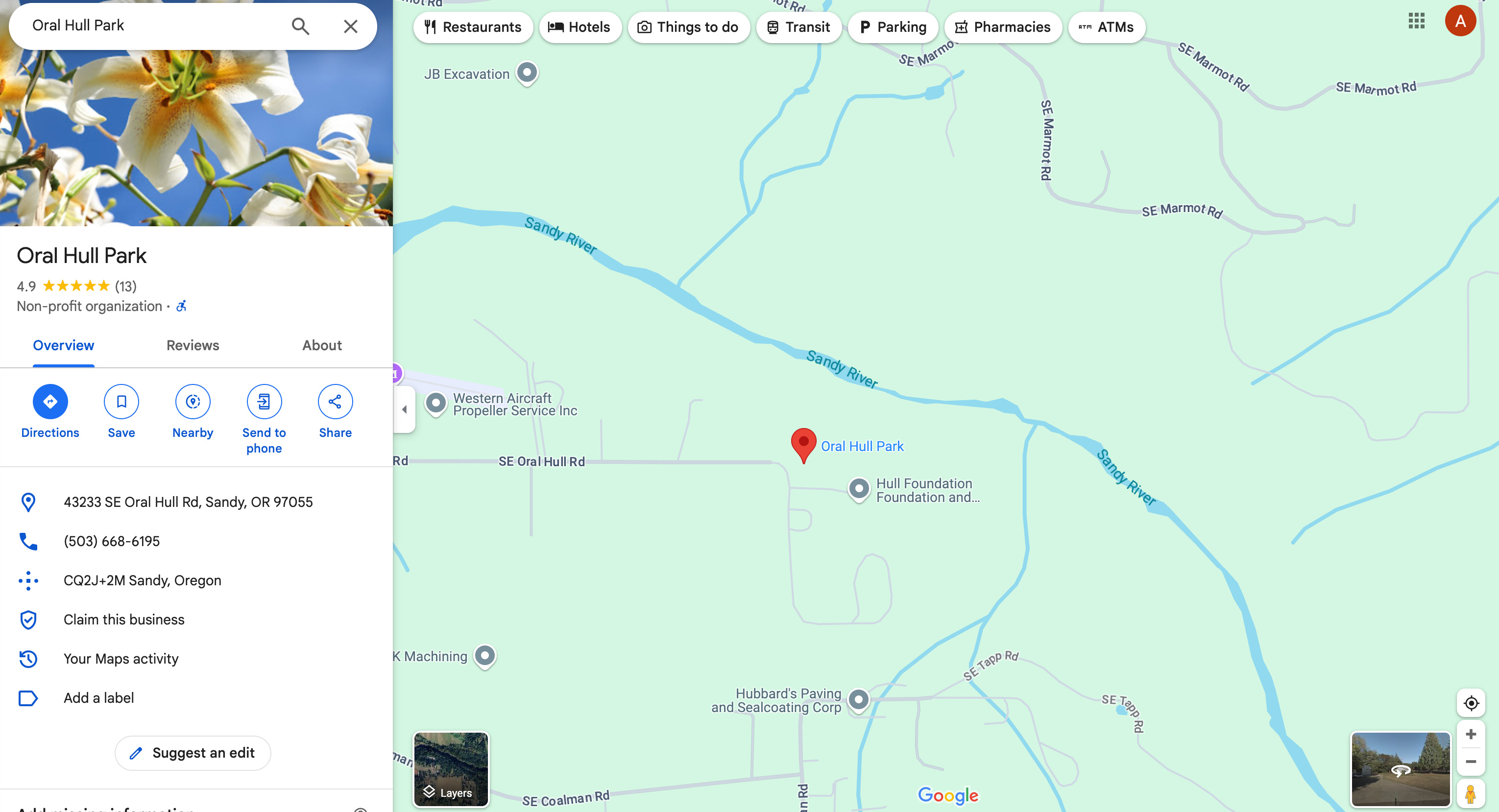
I do plan on one day creating a map of (settled, finished) Eden Valley. We’ll have to decide where the streets go, how many bridges are going to go over the river, where the proper center of town is, and more details.
But in the meantime, this is a lovely landscape on which to project all of my imagination.
Images taken from Google Street View:
On (real-life) Marmot Road, north of the river:
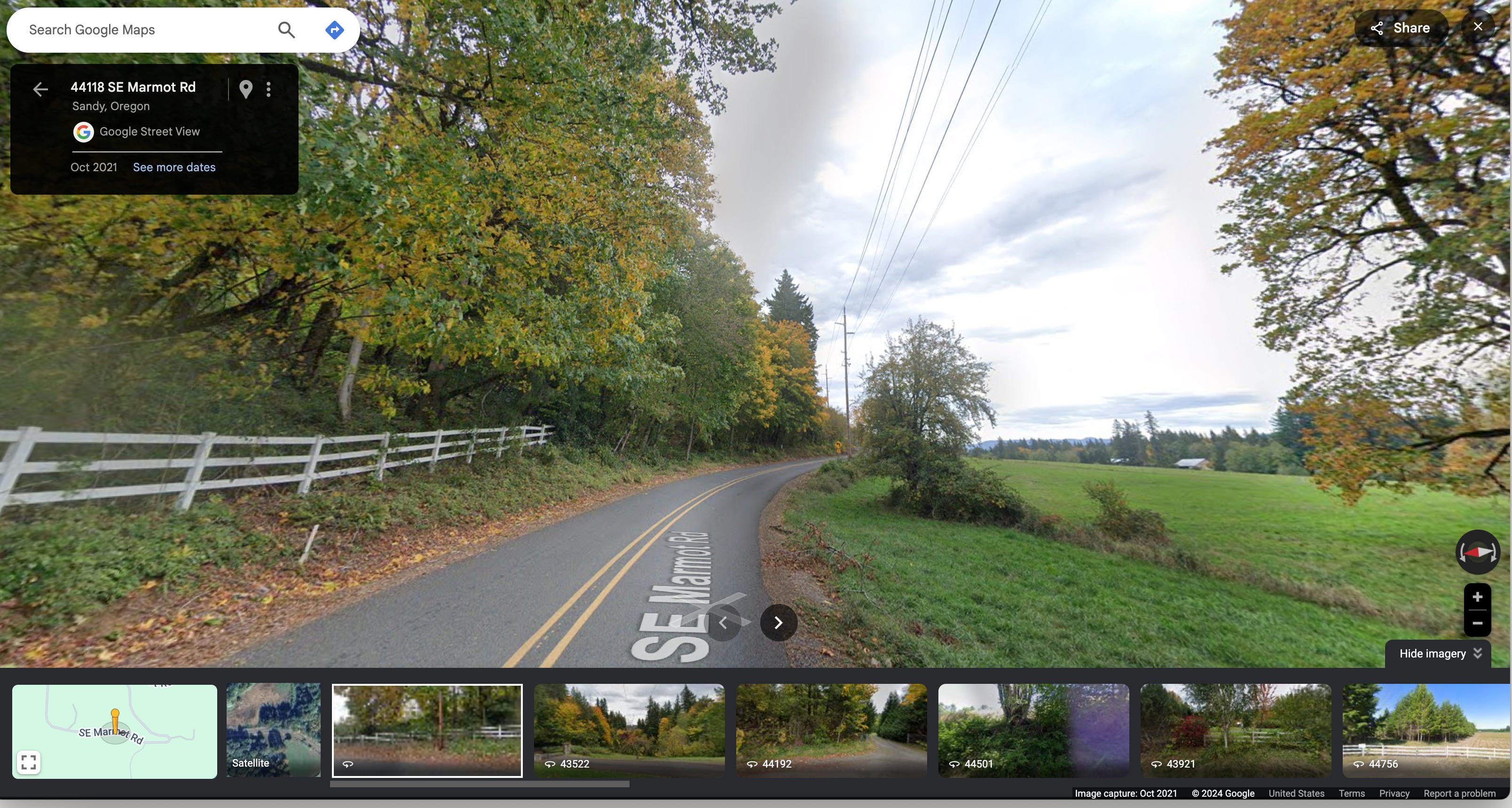
Green and lush and rolling hills and mountains in the distance.
On (real-life) Oral Hull Road, south of the river:
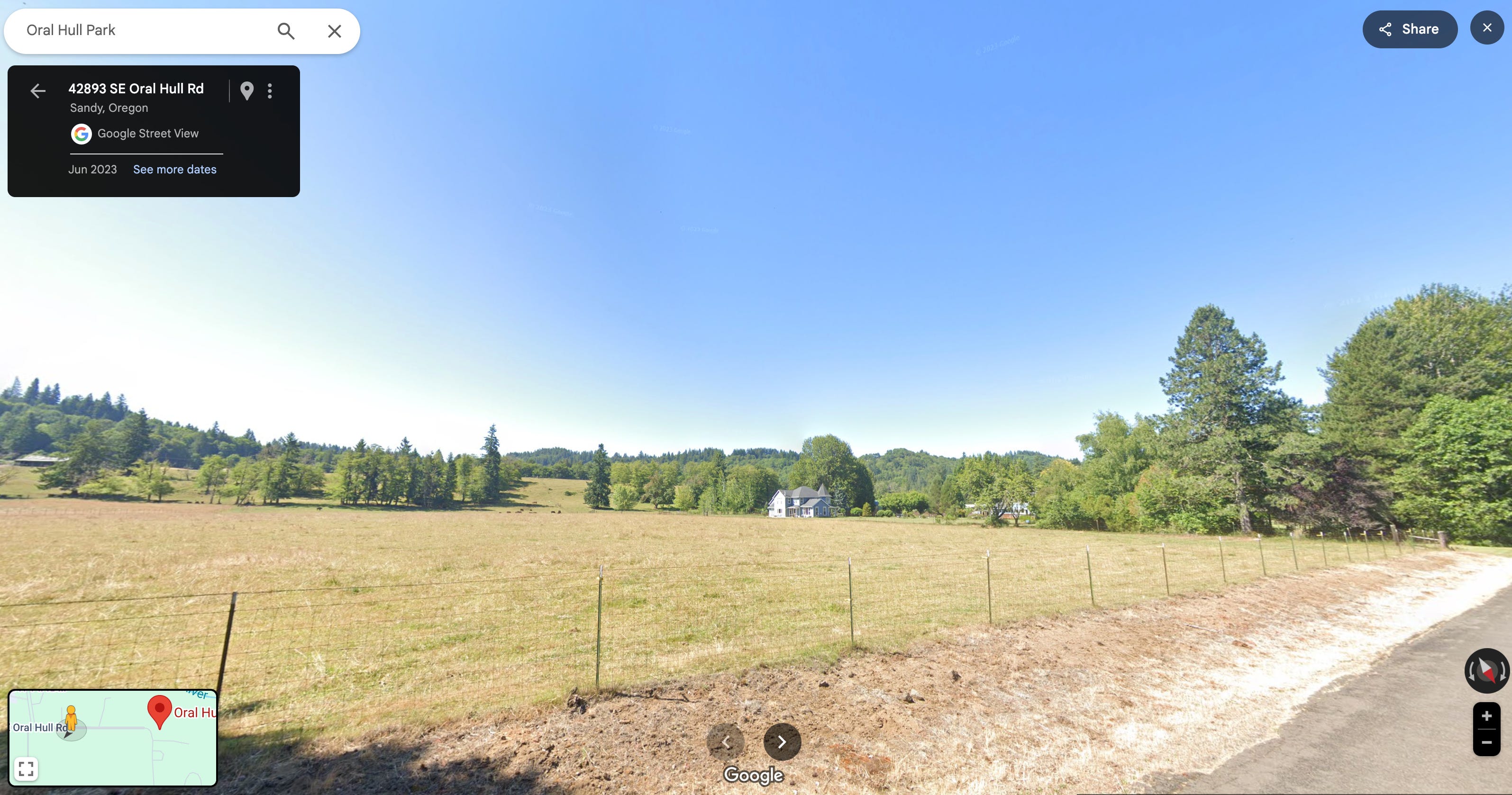
At the time of writing this, I have been to Oregon but not this part of the state. It would be so much fun to spend some time driving around the neighborhoods there and really envisioning where my characters can settle in, building out their homesteads and creating farms that will last for generations.
Eden Valley is a fictional town set in the Oregon Territory, and established fall of 1850. For all the stories of the brave pioneers that are settling Eden Valley, check out the historical women’s fiction series Oregon At Last by A.T. Butler.
Dear AT,
I dearly love all of your books! I have been to Sandy OR. It is still pretty wild there as I remember. In the shadow of the gorgeous Mt Hood. Perfect!
Thank you!!!! Have a wonderful holiday!
Kay Mills
This is such an interesting craft question — I landed on the opposite end of the spectrum from you and it's fascinating to see how different the considerations are.
My Moonshiner Mysteries are set in a fictionalized version of Pony, Montana — a real former gold-mining town in the Tobacco Root Mountains that peaked at about 5,000 people before the mines shut down in the early 1920s. By the time my books take place (1927), the town is already fading. I renamed it Pony Gulch, which gave me room to invent businesses, place buildings where I needed them, and create a community that serves the story — but the bones are real. The mountains, the isolation, the feel of a place that was once booming and is now holding on.
What I found is that starting with a real place gave me things I never would have invented — the stamp mill ruins, the way the town sits in the shadow of Hollowtop Mountain, the fact that it's miles from anywhere. Those details ground the fiction in a way that feels earned. But the fictionalization freed me from worrying about whether the general store was on the right side of the street.
What I didn't expect was how the real place would reach back. The local historical society found my books and started sending me ephemera — old photographs, local histories, details I never could have found on my own. We've done Zoom calls where they've walked me through the town's history. And residents and former residents have shown up in the comments on my blog posts about Pony, adding their own memories and corrections and family stories. The fictional town created a conversation with the real one.
Your Eden Valley sounds like it benefits from the opposite freedom — you're building something from the foundation up, which mirrors what your characters are doing. The setting strategy matches the story perfectly.